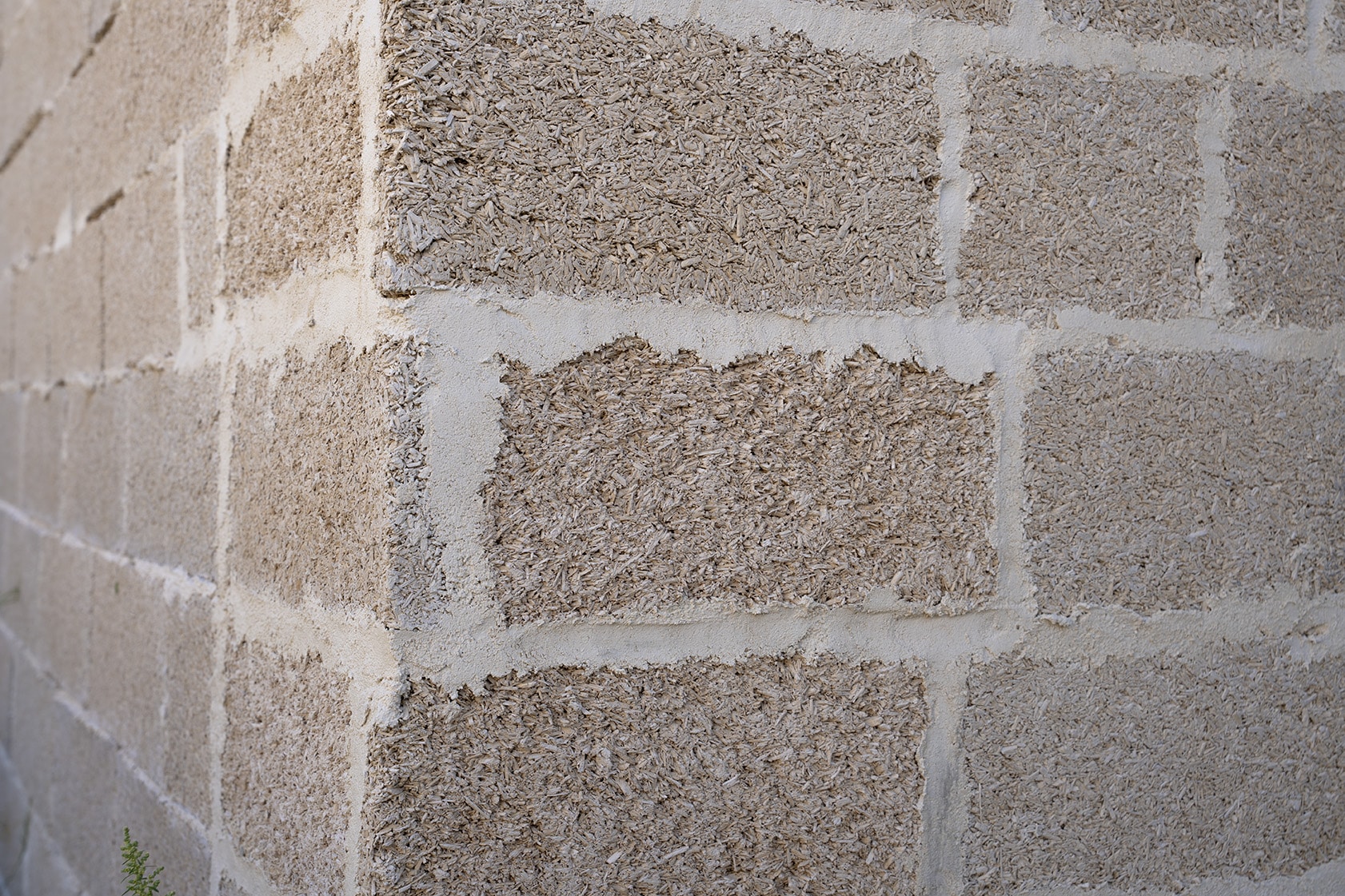

Building with hemp is not just about insulating a wall effectively. It also means choosing a material that behaves differently throughout its entire life cycle. This article brings together the key sustainability and circularity themes of the TecnoCanapa Bioedilizia® System, from CO2 sequestration by the hemp plant through to the biocomposite’s end of life.
Why discuss sustainability and circularity in the Biomattone® System?
The sustainability and circularity of a construction material cannot be measured using a single figure. The origin of the raw materials, processing and transport must all be considered, along with service life, maintenance and end of life. The TecnoCanapa Bioedilizia® System addresses these issues starting with a renewable plant resource: hemp. This is combined with a mineral binder compatible with recovery and reuse processes.
Hemp as a fast-cycle renewable resource
Industrial hemp fibre is an annually renewable resource. It is also non-toxic and of high quality. For example, one hectare of hemp produces approximately 9 tonnes of biomass per year, four times the amount produced by one hectare of forest. One hectare of hemp fibre also sequesters approximately 15 tonnes of CO2 with each harvest. Finally, industrial hemp cultivation does not require pesticides and enriches the soil.
Biomattone® and Bio Beton®: a regenerative material with a negative carbon footprint
A recent Life Cycle Assessment study by Politecnico di Milano analysed the system’s life cycle. The study was verified by ICMQ and led to the publication of an Environmental Product Declaration (EPD). The study produced an important finding: Biomattone® and Bio Beton® contribute to removing between 44 and 105 kg of CO2 from the atmosphere for every cubic metre of product. This carbon remains stored in the building envelope. The benefit derives from the speed at which the hemp plant grows, fixing carbon from atmospheric CO2 in its woody stem. As a result, the use of hemp shiv more than offsets the emissions generated across the product’s entire life cycle. The result is a carbon-negative and therefore regenerative material.
An Environmental Product Declaration follows an internationally recognised standard. This standard is defined by ISO 14025. In practice, this type of document makes a product’s environmental data verifiable and comparable instead of relying on generic claims.
Sustainability and circularity: from field to wall
The hemp-shiv production cycle is an example of the circular economy applied to construction. Energy consumption for processing is reduced by up to 90% compared with alternative insulation materials, both synthetic and mineral. In addition, the hemp plant sequesters CO2 while it is growing. This contribution to tackling climate change takes place before the plant even becomes a construction product.
| Indicator | Data |
|---|---|
| CO2 removed from the atmosphere | 44 to 105 kg per cubic metre of Biomattone®/Bio Beton® |
| Reduction in processing energy consumption | Up to 90% compared with synthetic and mineral insulation materials |
| Biomass produced | Approximately 9 tonnes/hectare/year, four times that of a forest |
| CO2 sequestered through cultivation | Approximately 15 tonnes/hectare with each harvest |
End of life: a biodegradable and reusable biocomposite
At the end of its life cycle, the hemp-lime biocomposite is fully biodegradable and reusable. This is consistent with current environmental protection and energy-saving practices. The plant component comes from a renewable resource, while the mineral component is compatible with recovery and reuse processes.
Recycled content and Minimum Environmental Criteria (CAM)
Some products in the system, such as Intonaco e Canapa, have a recycled-material content of more than 20% by product weight. This figure is certified in accordance with UNI/PdR 88:2020. The regulatory reference is the Minimum Environmental Criteria set out in Decree No. 256 of 23 June 2022. These criteria are increasingly required in public procurement, and the same applies to building energy and environmental certification schemes.
Frequently asked questions about the sustainability and circularity of the Biomattone® System
What does it mean that Biomattone® and Bio Beton® are “carbon negative”?
It means that these products remove more CO2 from the atmosphere than is emitted throughout their entire life cycle. The figure, between 44 and 105 kg per cubic metre, comes from the LCA study by Politecnico di Milano, verified by ICMQ.
What happens to the biocomposite at the end of its life?
The hemp-lime biocomposite is fully biodegradable and reusable. This is consistent with the most up-to-date environmental sustainability practices.
Do TecnoCanapa Bioedilizia® products contain recycled material?
Yes. Some products, such as Intonaco e Canapa, contain more than 20% recycled material by weight. This figure is certified in accordance with UNI/PdR 88:2020.
In summary, the sustainability and circularity of the Biomattone® System arise from the combination of a fast-cycle plant resource and a mineral binder compatible with recovery and reuse. To learn more about the calculation method and the LCA study data, see the article on EPD and LCA. You can also consult the product technical data sheets or contact the TecnoCanapa Bioedilizia® team via the contact page.