
Choosing thermal insulation with hemp and lime does not mean selecting a single product. It means deciding how to build the entire building envelope: walls, roof, floors and subfloors. The principle is simple but often overlooked: an insulation material cannot be assessed solely by its declared conductivity. Heat capacity, phase shift, water-vapour permeability and continuity of the layer build-up also matter. In this guide we look at how TecnoCanapa systems respond to each of these requirements, from Biomattone® blocks and Canafiber panels to Bio Beton®. Discover where each solution is used and how to choose between them.
Why hemp-lime thermal insulation should be assessed as a system
Indoor comfort depends on air temperature, wall surface temperature, relative humidity, air speed and the envelope’s ability to attenuate variations. For this reason, hemp-lime thermal insulation should always be assessed using several parameters together rather than thermal conductivity alone.
According to TecnoCanapa technical documentation, the parameters to consider together are:
- thermal conductivity
- heat capacity and mass
- attenuation and phase shift
- water-vapour permeability
- hygroscopic capacity
- surface temperature
- continuity of the layer build-up
- thermal bridges and construction details
These parameters become even more relevant when we consider that real buildings are subject to daily and seasonal variations in temperature, humidity, solar radiation and ventilation. Walls with similar U-values can therefore behave differently when heat capacity, mass and moisture management differ.
Responsible design does not set calculation against real behaviour: it uses calculations, testing and monitoring as complementary tools. For an independent technical comparison of dynamic envelope parameters, a reference source in Italy is ANIT, the Italian National Association for Thermal and Acoustic Insulation.
Applications of hemp-lime systems in the building envelope
Hemp-lime systems can be used in new construction, renovation and restoration projects. The technique changes, however, according to the structure, available thickness, substrate, required performance and site conditions. The main applications are:
- Infill walls – completing load-bearing structures with lightweight, vapour-permeable perimeter walls
- Internal lining walls – upgrading from the inside when work on the façade is not possible
- Partitions – internal walls designed for hygrothermal and acoustic comfort
- Floor insulation – horizontal applications and fills compatible with the layer build-up
- Subfloors – lightweight insulating layers integrated with the floor build-up
- Plasters and finishes – lime- and plant-fibre-based coatings for compatible substrates
- Restoration and refurbishment – work on existing buildings where vapour permeability and compatibility are central
In the following sections we look at which TecnoCanapa system products meet each of these applications, starting with perimeter walls.
Perimeter wall insulation: hemp-lime infill walls and external insulation
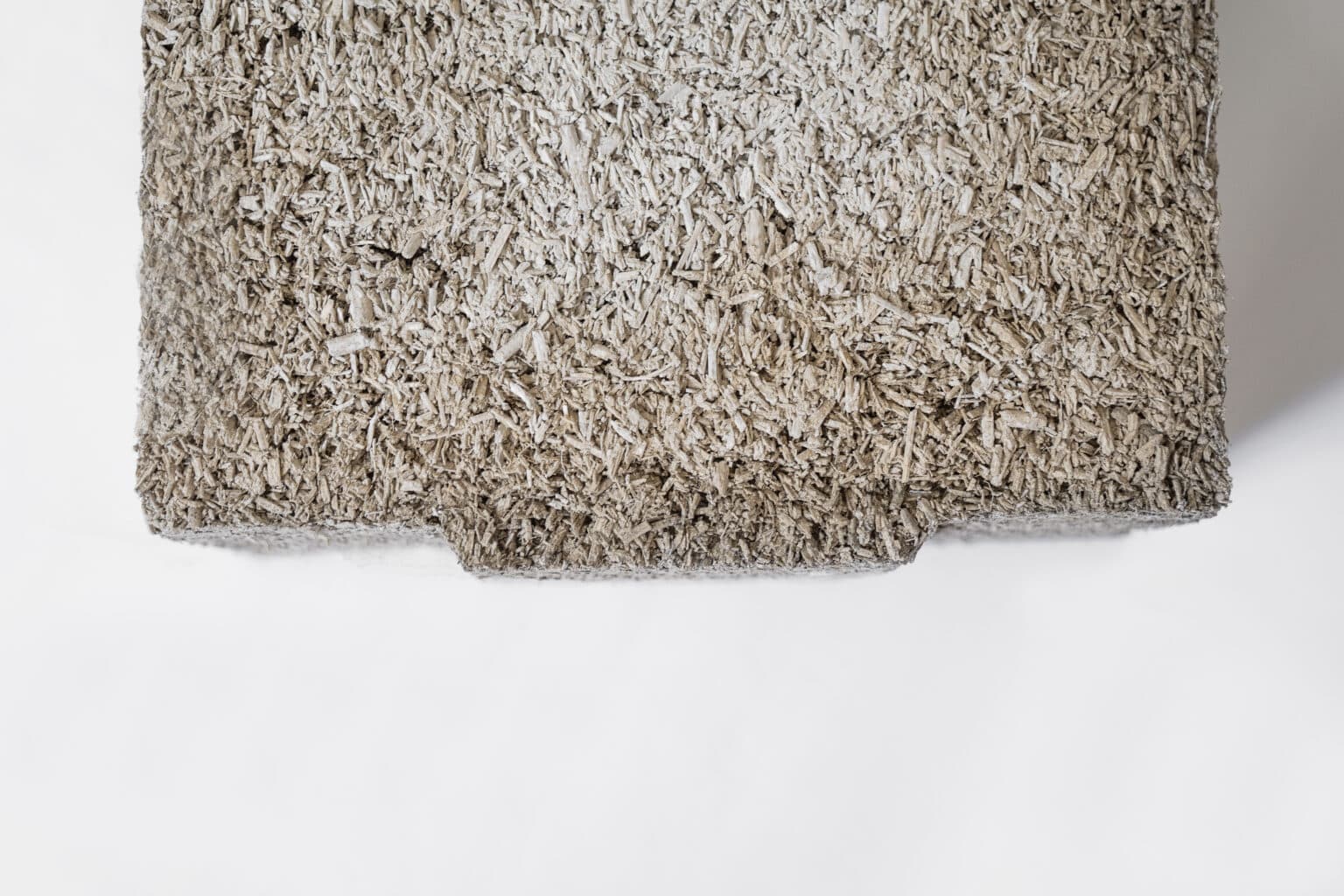
For infill walls, meaning the completion of load-bearing structures with lightweight, vapour-permeable perimeter walls, the TecnoCanapa system is based on the Biomattone® block. It is available in eight sizes, with a density of approximately 310 kg/m³ and thermal conductivity λ of 0.044 W/mK. Depending on thickness, the U-value ranges from 0.5 to 0.09 W/m²K and thermal phase shift from 3 to more than 32 hours. Reaction-to-fire and fire-resistance classifications reach B-s1,d0 and EI60–EI180 respectively. These values are indicative: the technical data sheet for the selected size remains the binding reference for the project.
For external wall insulation, the reference product is Canafiber Cappotto, a rigid insulation panel made from industrial hemp fibre. It has a density of approximately 100 kg/m³ and thermal conductivity λ of 0.039 W/mK. Depending on panel thickness, from 40 to 160 mm, the U-value ranges from 0.836 to 0.234 W/m²K. Reaction to fire is Class C-s2,d0. Thanks to its high breathability, it can replace conventional external insulation systems based on polystyrene, glass wool or rock wool.
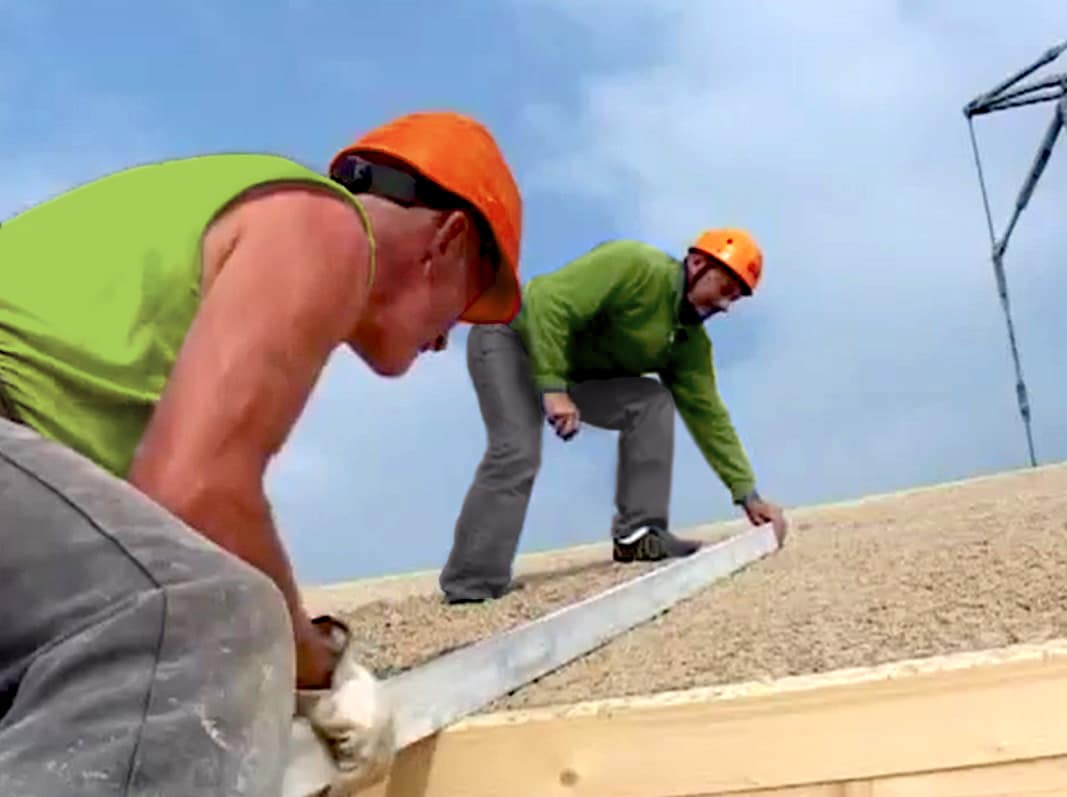
There is also a cast-in-place solution: Bio Beton®, a biocomposite applied directly on site to roofs, screeds, walls or formwork. It is available in premixed, ready-to-use big bags. It is used for external insulation of existing buildings, internal insulation and subfloors. Thicknesses range from 10 to 40 cm, with U-values from 0.49 to 0.13 W/m²K.
Hemp-lime roof and attic insulation
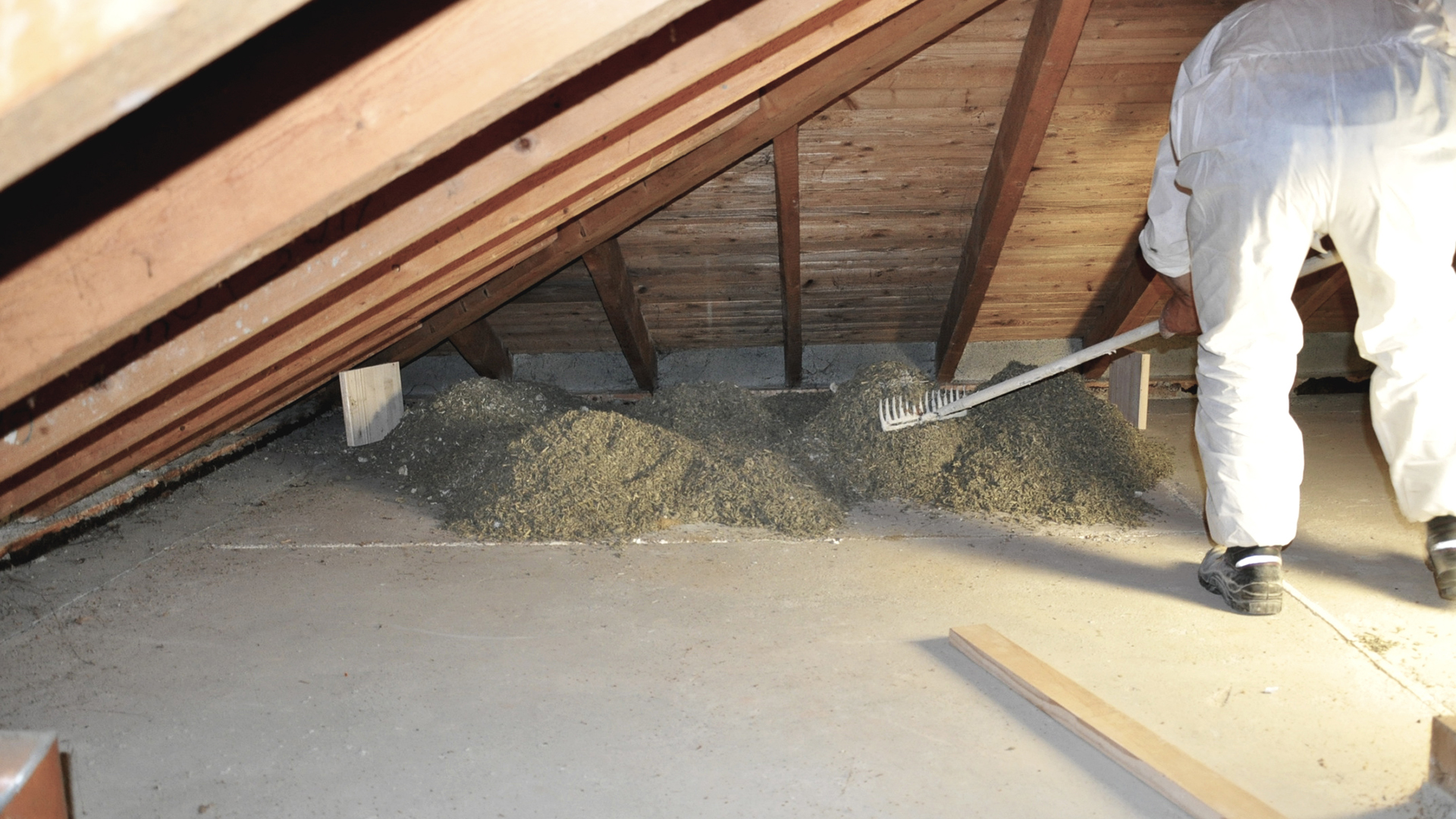
Roofs also benefit from hemp-lime systems. Bio Beton® is used for thermal and acoustic insulation of flat and pitched roofs. The thermal phase shift of the biocomposites also helps attenuate summer heat peaks, an aspect that is often lacking in low-mass systems. The subject deserves its own detailed explanation and is covered on the dedicated roof and attic insulation page.
Insulation of floors, cavities and internal lining walls
For thermal and acoustic insulation of roofs, walls and floors, in both new construction and renovation, the system offers Canafiber Intercapedine. It is a panel made from industrial hemp fibre (85%) and polyester fibre (up to 15%). It has a density of approximately 30 kg/m³ and thermal conductivity λ of 0.039 W/mK. Depending on thickness, from 40 to 120 mm, the U-value ranges from 0.836 to 0.308 W/m²K. According to the product data sheet, its qualities are enhanced when combined with vapour-permeable solutions such as Bio Beton® and Biomattone®.
For internal lining walls – useful where work on the façade is not possible – and for subfloors, the system uses Natural Dolomitic Binder mixed with hemp shiv. This makes it possible to create thermal-insulating plasters and biocomposites from 1 to 45 cm thick in a single application. It also preserves porosity, breathability and water-vapour permeability.
Humidity, breathability and condensation risk
Indoors, water vapour is generated every day by breathing, cooking, use of bathrooms and household activities. Porous materials such as hemp and lime can temporarily absorb part of this vapour and release it when conditions change: this is known as hygroscopicity. It does not replace air exchange, but it can contribute to a more stable indoor environment.
It is useful to distinguish three concepts. Hygroscopicity is the ability to absorb and release vapour. Vapour diffusion is the passage of vapour through the porous matrix. Breathability is the ease with which vapour passes through the complete layer build-up. Plasters, skim coats and paints must therefore also be selected consistently with the system: a finish that is too impermeable can restrict the behaviour of the entire build-up.
Condensation forms more readily on cold surfaces, at thermal bridges and in poorly ventilated cavities. For this reason, design must control continuity of insulation, surface temperatures, vapour diffusion and ventilation. No material on its own eliminates problems caused by design errors or incorrect use conditions.
Frequently asked questions about hemp-lime thermal insulation
What is the difference between Canafiber Cappotto and Canafiber Intercapedine?
Canafiber Cappotto is a rigid insulation panel with a density of approximately 100 kg/m³, designed for external wall insulation. Canafiber Intercapedine has a lower density of approximately 30 kg/m³. It is designed for thermal and acoustic insulation of wall cavities, roofs and floors, often combined with Bio Beton® or Biomattone®.
Is Biomattone® used only for load-bearing walls or also for external insulation?
Biomattone® is designed mainly for infill walls, meaning the completion of load-bearing structures with lightweight, vapour-permeable perimeter walls. For external wall insulation, the TecnoCanapa system provides dedicated products such as Canafiber Cappotto or cast-in-place Bio Beton®.
Do hemp-lime systems also help control humidity and condensation?
Hemp and lime have a structure favourable to vapour diffusion. Porous materials can also temporarily absorb and release some vapour through hygroscopicity. However, no material on its own eliminates condensation problems caused by design errors: continuity of insulation, surface temperatures and ventilation remain decisive.
What is the purpose of the thermal phase shift provided by these materials?
Thermal phase shift delays and attenuates the passage of heat through the wall, contributing to summer comfort. In Biomattone®, for example, it ranges from 3 to more than 32 hours depending on the block size. The longer the phase shift, the later – and more attenuated – the external heat peak reaches the inside of the building.
Are TecnoCanapa systems used only in new construction or also in renovation?
Both. Hemp-lime systems are suitable for new construction, energy-efficiency upgrades to existing buildings, and restoration and refurbishment projects. In the latter cases, compatibility with the existing substrate and vapour permeability are central considerations.
In summary: how to choose the right insulation system
There is no single product for insulating with hemp. The choice depends on the application – wall, roof, floor or subfloor – the available thickness and site conditions. Biomattone® is used for infill walls; Canafiber Cappotto and Canafiber Intercapedine cover the two main panel-insulation scenarios; and Bio Beton® is used for cast-in-place applications on roofs, walls and subfloors.
To confirm the most suitable solution for your project, consult the updated technical data sheets for each product. Alternatively, contact the TecnoCanapa technical department for a review of your specific project.