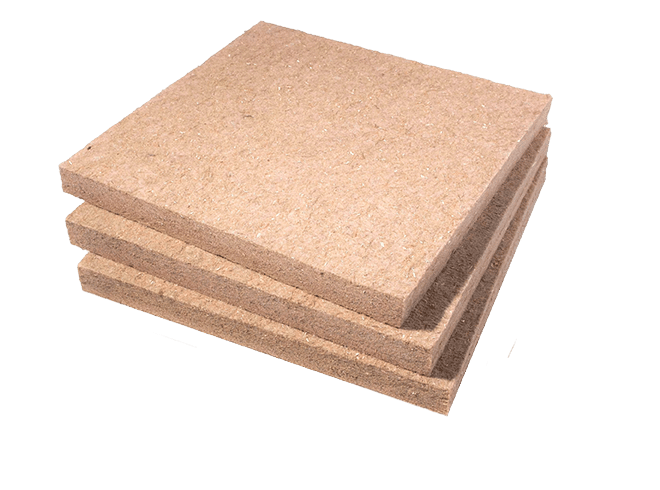

Hemp external insulation is the TecnoCanapa Bioedilizia® solution for insulating external walls with a plant-based material without compromising high thermal and acoustic performance. It is called Canafiber Cappotto and is designed as a natural alternative to external insulation systems based on polystyrene, glass wool or rock wool, in line with the approach described in the general guide to hemp-lime insulation.
What is Canafiber Cappotto hemp external insulation?
Canafiber Cappotto is a solid, environmentally friendly insulation panel made from industrial hemp fibres. It has a high density and adapts to different structural forms. It is used mainly as a thermal and acoustic insulation system for external walls, replacing conventional synthetic or mineral insulation materials.
Why choose this system for external walls?
The main advantage over a conventional external insulation system is breathability. Canafiber Cappotto panels allow water vapour to diffuse, keeping the wall drier and reducing the risk of condensation at critical points. This behaviour is consistent with the information in the Knowledge Base section dedicated to humidity regulation and the breathability of hemp-lime systems.
- High breathability, useful for both existing walls and new construction.
- Thermal and acoustic insulation in a single system.
- Renewable plant-based material.
- Resistance to frost and insects, with long-term durability.
- Compatible with the sustainable-construction approach of the complete TecnoCanapa system.
Hemp external insulation: when to choose it
This system is suitable when an existing external wall needs to be insulated without invasive structural work, or in new construction to complete the envelope with a breathable material. The choice between Canafiber Cappotto and other TecnoCanapa solutions, such as Biomattone® lining walls for internal interventions, depends on the available façade, architectural constraints and required performance. The TecnoCanapa technical department can support this assessment on a case-by-case basis.
Installation and site work: what to consider
As with all hemp-lime systems, installation affects the final result. The condition of the existing substrate, the flatness of the façade and the compatibility of subsequent finishes must be checked. These finishes must remain consistent with the panel’s breathability. Applying a low-permeability finish over this type of insulation would limit its benefits in terms of vapour management.
For a broader comparison of external insulation technologies available on the market, an independent technical source such as ENEA can be consulted alongside official TecnoCanapa technical documentation.
Frequently asked questions about Canafiber Cappotto
Does this system completely replace polystyrene or rock-wool external insulation?
Yes. Canafiber Cappotto is designed to replace these systems, with the additional advantages of breathability and the material’s plant-based origin.
Is it suitable for both new construction and energy-upgrade projects?
Yes, but in refurbishment projects the condition of the existing substrate and compatibility with the existing layer build-up must always be checked.
What is the difference between Canafiber Cappotto and Canafiber Intercapedine?
Canafiber Cappotto is designed for external wall insulation, while Canafiber Intercapedine is used to insulate cavities, roofs, attics and floors.
Complete technical data sheets for the panels are available in the website’s technical data sheets section. For a project assessment, you can contact the TecnoCanapa technical department.