
Insulating the attic is one of the most effective ways to reduce heat loss from a building: in winter it is the surface through which the most heat is lost, while in summer it receives the greatest heat gain from direct solar radiation on the roof. TecnoCanapa Bioedilizia® hemp-lime systems make it possible to insulate the attic by combining thermal performance, humidity regulation and indoor comfort, in line with the principles described in the general guide to hemp-lime thermal insulation.
Why insulate the attic: heat loss and comfort
An uninsulated attic, or one with discontinuous insulation, generates significant heat loss in winter. In summer, the same attic can overheat rapidly because of solar radiation on the roof, transmitting heat to the rooms below. Insulating the attic therefore means addressing both aspects: limiting steady-state heat flow and improving the dynamic behaviour of the envelope under actual operating conditions.
In hemp-lime systems, behaviour does not depend solely on the declared thermal-conductivity value. Mass, heat-storage capacity and management of the moisture contained in the material’s pores also matter. These factors contribute to stabilising the indoor microclimate, as described in the hygrothermal-comfort section of the TecnoCanapa technical Knowledge Base.
TecnoCanapa solutions for insulating the attic
TecnoCanapa Bioedilizia® offers two product families for roof and attic insulation, selected according to the existing layer build-up, available thickness and site conditions.
Bio Beton® for roofs and attics
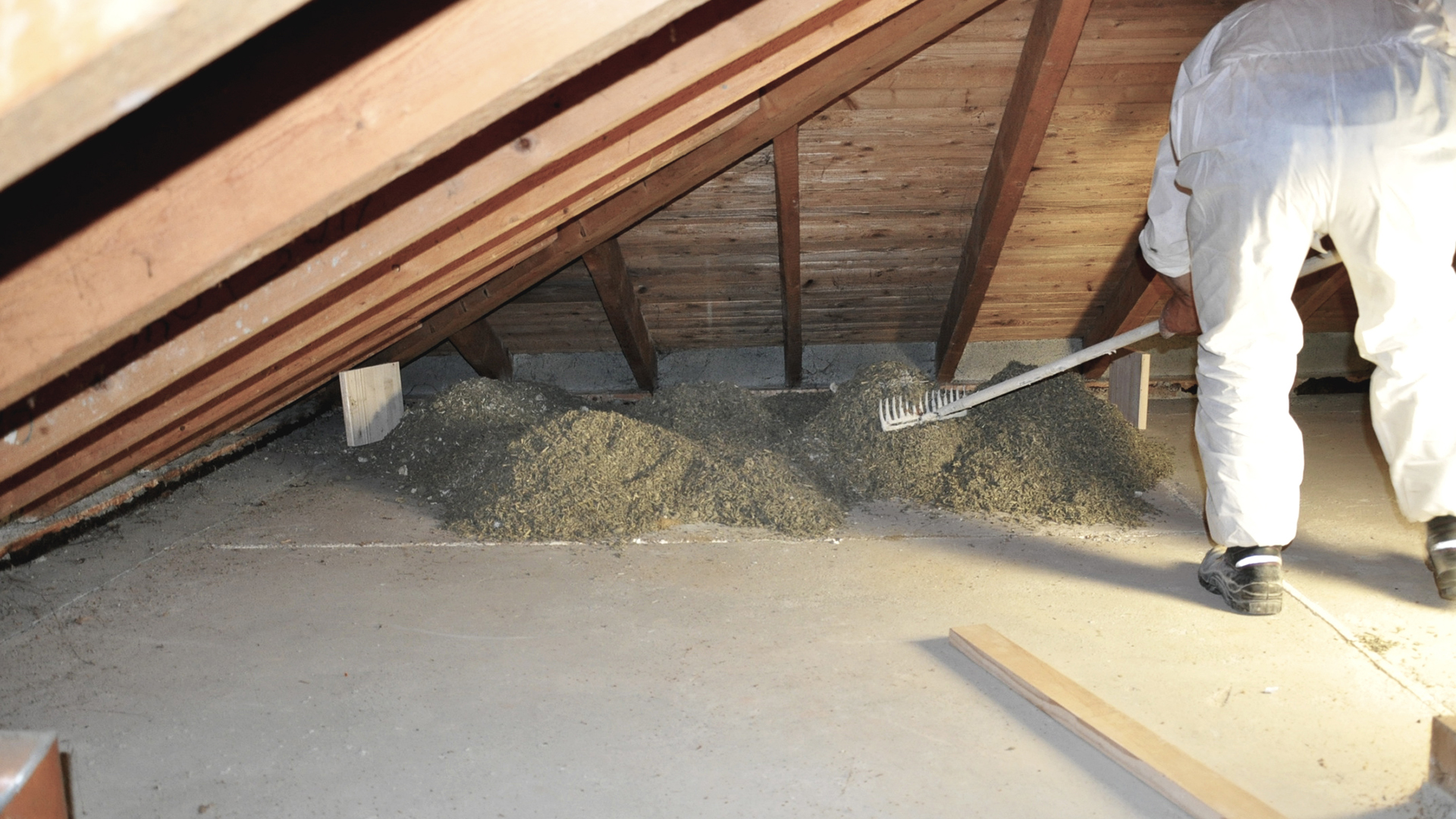
Bio Beton® is a mass insulating material that combines insulation and thermal inertia. It consists of Coarse Hemp Shiv, Natural Dolomitic Binder and a probiotic additive based on symbiotic microorganisms. It is ideal for insulating floors, roofs, attics, subfloors and cavities, and is available either premixed and ready to use or loose for mixing directly on site.
Canafiber Intercapedine for roofs and attics
Canafiber Intercapedine is an insulating material made from industrial hemp fibres and is a natural alternative to soft mineral and synthetic insulation materials. The panels are suitable for thermal and acoustic insulation of roofs, attics, walls and floors. Performance improves when the panel is combined with vapour-permeable solutions such as Biomattone®, maintaining consistent vapour permeability throughout the complete layer build-up.
Benefits of insulating the attic with hemp and lime
- Continuous thermal insulation, without breaks at critical points in the roof.
- Humidity regulation thanks to the hygroscopic capacity of hemp.
- Good breathability, useful for reducing the risk of condensation in poorly ventilated attics.
- Favourable dynamic behaviour, with attenuation and phase shift of the summer heat wave.
- A renewable plant-based material compatible with a sustainable-construction approach.
Thermal phase shift: summer comfort in the attic
Steady-state thermal transmittance describes heat flow under simplified conditions, but a real attic is subject to large daily variations in temperature and solar radiation. For this reason, when assessing how to insulate an attic, it is useful to consider dynamic parameters as well. Walls and roofs with similar U-values can behave differently in summer depending on the heat capacity and mass of the materials used. In hemp-lime systems, this behaviour helps attenuate the heat peaks that normally concentrate in the attic.
Installation and site work: what to consider when insulating the attic
The installation stage is critical to the final result. The material contains mixing water that must be able to evaporate gradually, so site timing and conditions need to be managed carefully.
- Check the substrate and the initial condition of the existing roof.
- Follow the formulation specified for the selected system (Bio Beton® or Canafiber).
- Protect surfaces from precipitation during sensitive installation stages.
- Promote even drying with controlled attic ventilation.
- Avoid premature closure with finishes that have low vapour permeability.
Incomplete drying can delay subsequent work and create unfavourable conditions for adjacent elements. For a broader overview of general site criteria, independent technical sources such as ENEA can be consulted alongside the specific guidance provided by the TecnoCanapa technical department.
Insulating the attic with hemp and lime: frequently asked questions
What is the best product for insulating an attic?
It depends on the layer build-up. Bio Beton® is suitable for fills and mass insulation, while Canafiber Intercapedine is designed as panel insulation within cavities. The choice should be assessed with the TecnoCanapa technical department according to the project.
Does insulating the attic also help in summer?
Yes. In addition to limiting winter heat loss, an attic insulated with a mass-based system such as hemp and lime attenuates and delays summer heat gain thanks to thermal phase shift.
Is a different approach required for an existing attic?
Yes. In refurbishment work, the existing substrate and compatibility with the existing finishes must always be checked so as not to compromise the breathability of the build-up.
For detailed technical data on individual products, see the website’s technical data sheets section. For a project assessment, you can contact the TecnoCanapa technical department.