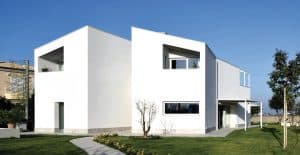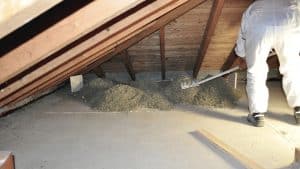
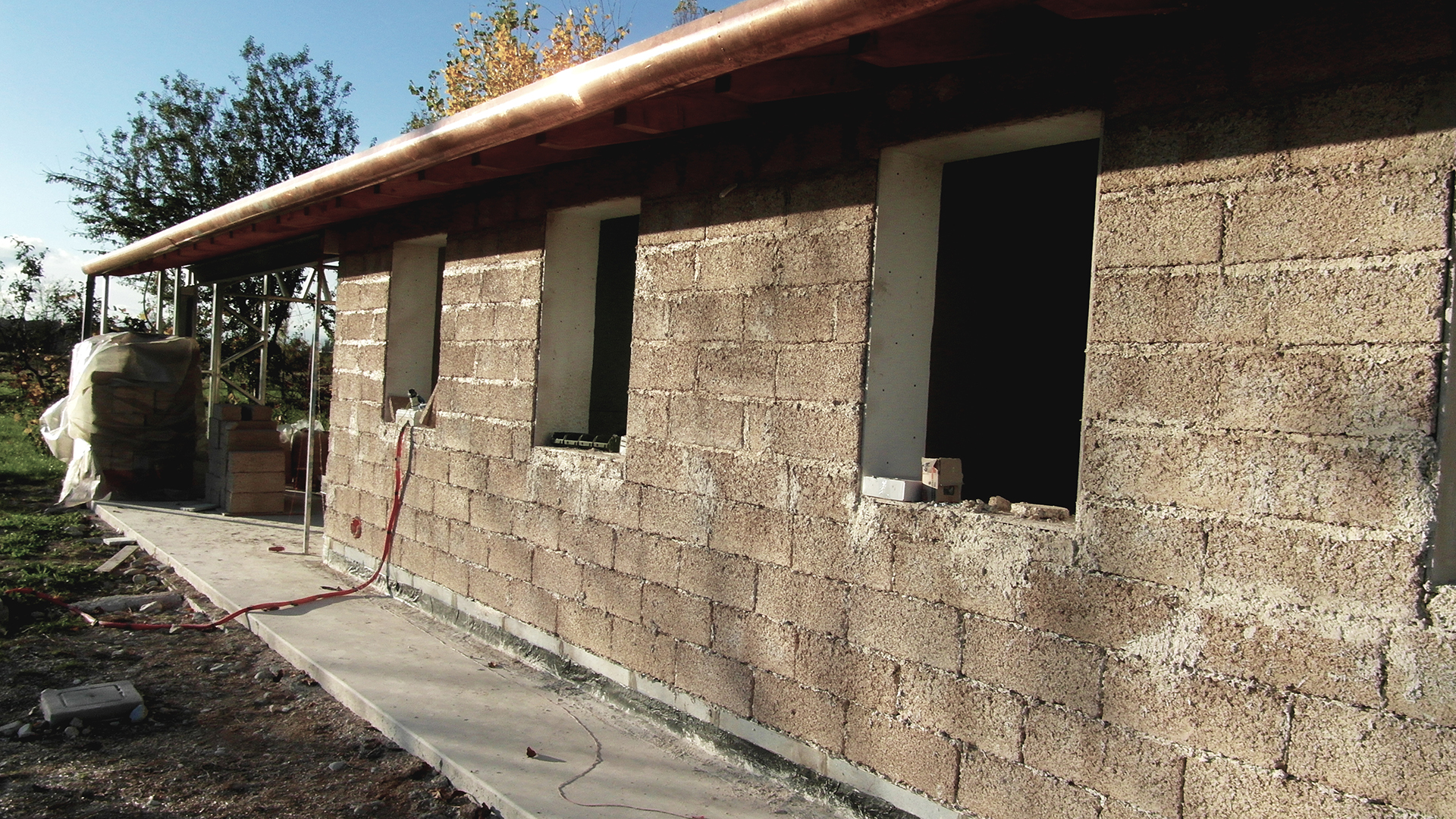

Biomattone® is the core product of the TecnoCanapa Bioedilizia® System: a hemp-lime masonry block that combines thermal insulation, thermal mass and vapour permeability in a single building element. Before choosing between infill walls, external insulation or internal insulation, it is therefore useful to understand the complete Biomattone range, which consists of eight sizes designed for different project requirements. In this article we bring together composition, characteristics, size-specific technical data, applications and compatible finishes in a single reference guide.
What is Biomattone®? Composition and construction principle
Biomattone® consists essentially of three components: Coarse Hemp Shiv (CenC-certified hemp wood), Natural Dolomitic Binder (a dolomitic hydrated-lime binder) and Probiotic Additive, a culture of non-pathogenic symbiotic microorganisms. The combination of these three components creates a biocompatible construction material that, in line with social and environmental sustainability principles, combines high insulating capacity, low embodied energy in manufacturing and the ability to absorb CO2 from the atmosphere during lime carbonation. As a result, every wall built with Biomattone® behaves as an active system rather than simply as a passive barrier between indoors and outdoors.
Characteristics of the Biomattone range: thermal, acoustic and hygric comfort
All sizes in the Biomattone range share the same performance characteristics, regardless of the thickness selected. The block is permeable to water vapour, so it remains breathable and contributes to the natural regulation of indoor humidity. It is also resistant to fire, frost, insects and rodents. In practice, Biomattone® provides thermal, acoustic and hygric comfort in a single element, reducing the need for complex multi-layer build-ups. Internationally, hemp-lime construction is recognised as a low-environmental-impact building technique by independent organisations such as the International Hemp Building Association, a reference organisation for the dissemination of these materials in Europe. At the end of its service life, Biomattone® is recyclable, in keeping with the circular-economy principles of the TecnoCanapa Bioedilizia® System.
The complete Biomattone range: 8 sizes for every construction requirement
The Biomattone range includes eight sizes, from BA8 to BA50, all with a dry density of 310 kg/m³ and thermal conductivity λ of 0.044 W/mK. For example, the thinnest size (BA8, 8 cm thick) is suitable for internal lining walls and partitions, while thicker sizes such as BA40 and BA50 are designed for high-performance load-bearing or infill walls. What changes significantly from one size to another, however, is thermal transmittance and thermal phase shift: the time it takes heat to pass through the wall. This is a key parameter for summer comfort and is explored in the article dedicated to the thermal phase shift of Biomattone® blocks.
| Packaging | Dimensions L×H×T (cm) | U-value (W/m²K) | Thermal phase shift | Fire resistance |
|---|---|---|---|---|
| BA8 | 50×20×8 | 0.50 | 3h 00′ | — |
| BA12 | 50×20×12 | 0.34 | 5h 44′ | EI60 |
| BA20 | 50×40×20 | 0.21 | 11h 19′ | — |
| BA25 | 50×20×25 | 0.17 | 14h 46′ | — |
| BA30 | 50×20×30 | 0.14 | 18h 14′ | EI180 |
| BA36 | 40×20×36 | 0.12 | 22h 23′ | EI180 |
| BA40 | 50×20×40 | 0.11 | 25h 08′ | EI180 |
| BA50 | 40×20×50 | 0.09 | 32h 04′ | EI180 |
In addition to the data shown in the table, the entire Biomattone range has a compressive strength of 0.4 N/mm², a water-vapour diffusion resistance factor μ of 4.5, Class A sound absorption and B-s1,d0 reaction to fire. For the BA30, BA36, BA40 and BA50 sizes, the weighted sound reduction index Rw is also available, ranging from 40 to 45 dB depending on thickness.
Applications: from infill walls to external insulation
Thanks to its range of sizes, Biomattone® can be adapted to different stages and types of project. Its main applications include insulating, vapour-permeable infill walls; external insulation of existing buildings; internal insulation using insulating Biomattone® lining walls; underfloor insulation; and internal partitions with acoustic insulation. A refurbishment project, for example, can use BA12 for an internal lining wall while using a thicker size such as BA30 for the external infill of a new wing of the building.
Installation: how to build with Biomattone®
In practice, installation involves laying the blocks with a thin layer of mortar made from lime and hemp shiv, in the proportions specified in the TecnoCanapa Bioedilizia® installation manual. The blocks can be cut with a hand saw or power saw, simplifying the handling of construction details on site. Internal walls and partitions can then be coated with sand-and-lime mortar, clay, gypsum or other vapour-permeable finishes, while external surfaces can be left exposed or protected with dedicated breathable finishes.
Finishes compatible with the Biomattone® System
To complete the wall, the TecnoCanapa Bioedilizia® System provides a range of finishes specifically designed for Biomattone®. On the exterior, Natural Lime Plaster and Stabilitura Naturale Traspirante Plus, both based on NHL 5 natural hydraulic lime, provide high water-vapour permeability and are also suitable for work on buildings of historic and artistic interest. On the interior, finishes such as Canapulino® and Canaposo® enhance the wall’s natural appearance, while Malta Fine, a ready-to-use finishing plaster based on lime putty and graded sands, is applied over base coats such as Natural Lime Plaster and is for interior use only. In this way, every component of the system remains consistent with the vapour permeability of Biomattone® without compromising its hygric performance.
Frequently asked questions about the Biomattone range
Which Biomattone® size should be chosen for an internal lining wall?
The thinner sizes, such as BA8 or BA12, are generally used because they take up less space while maintaining thermal comfort and vapour permeability. Anchoring details are described in the article on insulating internal lining walls.
Is Biomattone® also suitable for historic buildings?
Yes. Its compatibility with highly vapour-permeable natural-lime finishes makes it suitable for work on buildings of historic and artistic interest as well as for new sustainable construction.
How do the different sizes compare in terms of thermal phase shift?
Thermal phase shift increases with thickness: from 3 hours for the BA8 size to more than 32 hours for BA50. For more information on the relationship between phase shift and summer comfort, see the dedicated article.
In summary, the Biomattone range covers the full construction cycle of a hemp-lime building, from load-bearing infill walls to refurbishment lining walls. For more detail on individual technical aspects, see the articles on hygrothermal comfort, water-vapour permeability and the product technical data sheets, or contact the TecnoCanapa Bioedilizia® team via the contact page for tailored advice.