
Working on an existing building is different from building from scratch. Historic masonry requires compatible materials that can remain vapour-permeable and work together with the original structure. For this reason, the restoration and refurbishment of buildings requires careful material selection. The Biomattone® System is rooted in the tradition of lime, a binder that has been used for centuries in architectural restoration. It is precisely this tradition that guides the system’s technical choices.
Why lime is compatible with historic buildings
Lime is one of the oldest binders used by humankind. Its use spans Roman architecture, the medieval building tradition and restoration. The lime cycle begins with limestone. Through calcination, slaking and carbonation, the material progressively returns to a stable mineral form. This slow process underpins its durability. It is also the main reason for its compatibility with historic substrates and natural materials. This is why lime remains the benchmark choice today for work on existing buildings.
Restoration and refurbishment: the needs of an existing building
In restoration and refurbishment work on existing buildings, vapour permeability and compatibility are essential. Historic masonry built with natural materials must continue to exchange moisture with the surrounding environment. A plaster or mortar that is too rigid or insufficiently vapour-permeable can create stresses between materials. Over time, this can lead to detachment and deterioration. Hemp-lime biocomposites meet this need by combining natural air-setting binders with a highly vapour-permeable plant-based material, maintaining continuity with the original masonry.
Natural Dolomitic Binder for the restoration of historic buildings
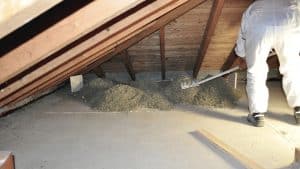
Natural Dolomitic Binder is a natural air-setting binder free from chemical or cementitious additives. It is used to prepare the Bio Beton® range of hemp biocomposites on site. It is designed particularly for the restoration of historic buildings, refurbishment projects and new construction. It is also suited to the requirements of new sustainable construction and the creation of NZEBs (Nearly Zero-Energy Buildings). With this binder, biocomposites can be prepared on site for infill walls, insulating internal lining walls, roof insulation and floor insulation. In this way, each restoration and refurbishment project can use a mix tailored to its specific requirements.
Natural Lime Plaster: the finish for conservation work
For finishing historic masonry, the Biomattone® System includes Natural Lime Plaster (ICN). Its vapour-permeability characteristics and application data are described in the article dedicated to Natural Lime Plaster. Together with Natural Dolomitic Binder, ICN completes a system designed for work on existing masonry, allowing intervention without compromising its hygric balance.
A restoration and refurbishment project in Caneva (PN)
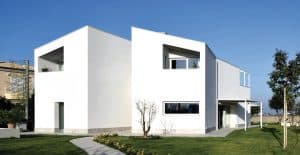
The TecnoCanapa Bioedilizia® System project references include a project completed in Caneva, in the province of Pordenone. It is one of the reference projects in which hemp-lime biocomposites were used and is a practical example of how these materials can be incorporated into work on an existing building. This is consistent with the principles of vapour permeability and compatibility described in this article. Projects like this show, in practice, how the theory of restoration and refurbishment is translated into real construction work.
Frequently asked questions about restoration and refurbishment with the Biomattone® System
Why is lime suitable for restoring historic buildings?
Because it is vapour-permeable and compatible with natural masonry. Unlike rigid cementitious binders, it does not create stresses with historic materials.
Which product is used to prepare biocomposites on site for restoration work?
Natural Dolomitic Binder, designed for the restoration of historic buildings and refurbishment projects as well as other applications.
Which finish is used for conservation work?
Natural Lime Plaster (ICN), described in the dedicated article.
To learn more about the finish designed for conservation work, read the article on Natural Lime Plaster. Product technical data sheets are available in the dedicated section. To assess the most suitable solution for your existing building, you can contact the TecnoCanapa team.